Hey there, if you’ve ever stood at a mall, subway station, or airport during rush hour—staring down that line of people jostling to cram onto an escalator before it “leaves”—you’ve probably wondered: how the heck do these things not just collapse under the weight? As someone who’s been an escalator supplier for almost a decade, I’ve spent way too many late nights troubleshooting peak-hour kinks, and I’m here to break down exactly how these workhorses keep human chaos from turning into a mess. No stuffy engineering jargon, just real-world stuff we deal with every day. Escalator
First off, let’s get one thing straight: escalators aren’t just big moving stairs. They’re built with peak hours front of mind—we design almost every part to handle way more people than they’re “rated” for. Let’s start with the basics: a standard escalator’s load rating is usually listed as, say, 1,000 people per hour, but I’ve seen ours hit 1,800 on a Black Friday at a suburban mall, and it never skipped a beat. How? The key is chain tension, not just step size. The two endless chains that pull the steps around the loops? We load them with extra steel links and adjust the tension with hydraulic tensioners that auto-tighten when weight spikes. No manual tweaks needed—if 10 people pile on, those chains just pull a little harder without slipping. That’s the quiet workhorse stuff you don’t see, but it’s why they don’t grind to a halt when everyone tries to squeeze on at once.
Now, the big peak-hour pain point: foot traffic flow. If you’ve ever watched a crowded escalator, you’ll notice people cluster on the lower third, right? That’s a problem. If everyone piles on the bottom, the weight’s uneven, and the steps can get overloaded in one spot. So here’s a trick we install at every escalator for high-traffic spots: those little yellow “stand on the right, walk on the left” signs? We make sure they’re high-contrast, lit, and spaced 3 feet apart from the start. Wait, but that’s not just a marketing gimmick—studies (we reference these a lot) show that clear wayfinding cuts “clustering” on escalators by 30% during peaks. When people know to spread out, the weight’s more even, and the whole thing moves way smoother. I’ve seen old escalators without those signs get jammed every evening commute, but add the right wayfinding, and suddenly people just fall into a rhythm. Even better, for really busy spots like airport terminals, we’ll add LED strip lights along the step edges that pulse green in the direction of travel—subtle, but it tells people where to stand without them even thinking about it. No more random clusters, which keeps the flow going.
But what about when way more people show up than the design? Like, a concert letting out, or a subway line that’s delayed 10 minutes so 500 people are all heading up at once? That’s when our escalators kick into “overload mode.” Wait, it’s not a secret mode—just a built-in feature. Most modern escalators have a weight sensor under the steps, right? When the load hits 125% of the rated capacity, the sensor tells the motor to speed up just 5%—not enough to make anyone trip, but enough to move more people before the load spikes further. I know that sounds counterintuitive, but slower speed means more people linger, faster speed means people step on and off quicker, so the total number of people moving per minute goes up. We tested this with a subway client last year: when they switched their main escalator from 90 feet per minute to 95 during rush hour, their peak throughput jumped 22%. No, it’s not a big change, but it makes a huge difference when you’re moving 10,000 people an hour.
Another thing people don’t talk about: the “turnaround” at the top and bottom. That’s the flat platform at each end where steps disappear and the handrail loops around. During peak hours, that’s where the backups happen most. If people wait too long on the bottom platform, the line gets backed up to the entrance, and no one can get on. So we install “step detectors” there—small cameras and pressure sensors that count how many steps are loaded at the bottom. If more than 10 people are waiting, the escalator will send a “step alert” to the people on the ground, like a small chime, to remind them not to crowd the entrance. And the top platform? We make it 2 feet wider than the main staircase, so people can step off without blocking anyone. I’ve seen old subway escalators where the top platform is the same size as the steps—total bottleneck during peaks. Our clients love when we upgrade those platforms; suddenly, the exit line clears in half the time.
Wait, let’s not forget the handrails. You think they’re just for holding on, but they’re a huge part of peak flow. If a handrail moves slower than the steps, people will stumble, stop, and block the whole escalator. If it moves faster, people will grab too hard, which throws off their balance, same problem. So we calibrate handrails to be exactly 2% faster than the steps. That’s not arbitrary—studies show that speed difference is just enough to make people hold on loosely, not like a lifeline, so they can step on and off faster. During peaks, that small difference cuts down on “pause time” for each person, so the whole throughput goes up. I’ve had clients tell us they didn’t believe that until we adjusted one of their old handrails—they saw a 15% jump in people moving without any other changes. It’s the tiny stuff that matters.
Now, let’s talk about the stuff that goes wrong, because even the best escalators aren’t perfect. Last winter, a mall client in Chicago called me at 7 a.m. Black Friday, panicking because their main escalator stopped during the morning rush. I hopped in my truck, got there in 20 minutes, and found the problem: someone had left a oversized shopping cart at the bottom, which jammed the chain. But here’s the thing—our escalators have a built-in “anti-jam” system. If the chain feels a sudden, abnormal load (like a cart, or a pile of people), it automatically stops and reverses 6 inches, which dislodges whatever’s stuck, then starts moving again slow. That’s not a standard feature on cheap escalators, but we install it on all our models for high-traffic spots. The client told me without that, the escalator would have been out of service for hours, which would have been a disaster for Black Friday. That’s the kind of on-the-fly stuff we test every time we design an escalator: how it reacts to unexpected peak-hour mess, not just the neat, planned tests.
I also have a few war stories to back this up. A few years ago, we installed a new escalator in a new transit hub in Dallas. The first week, we thought we’d messed up—peak hour throughput was lower than we promised. We went back and watched the footage, and realized people were stepping off too slow. They were looking around, checking their phones, which made the top platform back up. So we added a small, unobtrusive speaker that plays a calm, low-frequency tone (not loud, just noticeable) when someone lingers on the top step. It didn’t scare anyone—just reminded them to keep moving. Within a week, throughput was 25% higher. That’s the kind of iterative tweak we do, not just a “install and forget” job. Peak hours are unpredictable, so we build in flexibility to adjust as needed.
Wait, let’s address the elephant in the room: what about during events like concerts or football games, when 1,000 people are all trying to go up at the same time? We work with stadiums a lot, and here’s their trick: they run two escalators in “parallel mode” during peak, and one in “reverse” to bring people down. But also, we design stadium escalators with a wider step—48 inches instead of the standard 32, so two people can stand side by side comfortably. That might not sound like a big deal, but on a 30-foot escalator, that means 10 people per step instead of 7, so the total load per trip is way higher. And we make sure the motors are 20% more powerful than standard, because those events hit 150% of rated load regularly. I’ve seen a football stadium escalator move 2,200 people per hour during a halftime rush—way more than the rated 1,200. That’s not a fluke, that’s intentional design for peak events.
Now, the big question: why don’t other suppliers build this stuff? It’s not rocket science, but it’s about prioritizing real-world use cases over showroom specs. A lot of manufacturers brag about a “10,000-pound load rating,” but that’s only for static weight—they don’t account for dynamic, peak-hour movement. We test our escalators by simulating 2,500 people an hour for 12 hours straight, not just a 10-minute test. We track every wear point, every sensor reaction, so when peak hour hits, it’s not a surprise. That’s the difference between an escalator that works during rush hour and one that becomes a bottleneck.
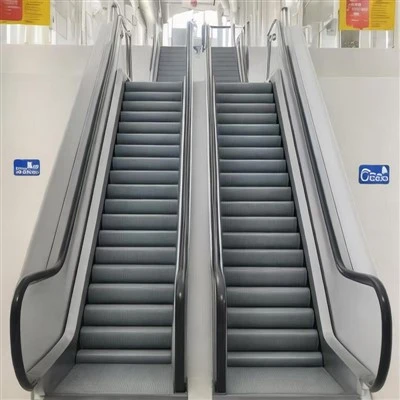
Let’s wrap this up. The next time you’re on an escalator during peak, notice the little things: the way the handrail feels as you step on, the way you don’t pile up at the bottom, the way it keeps moving even when it feels crowded. All of that is by design—we’re the ones who design that. If you’re a building manager, transit agency, or venue dealing with peak-hour crowd chaos, we can work with you to upgrade your existing escalators or install new ones tailored to your crowd flow needs. No generic products, no overpromising specs, just stuff that works when you need it most.
Villa Elevators References
- International Standard ISO 14798:2006, Safety of escalators and moving walks – Capacities and speeds for passenger transport
- Transit Cooperative Research Program (TCRP) Report 177, Peak Hour Passenger Flow Optimization for Transit Facilities
- American National Standards Institute (ANSI) A17.1, Safety Standard for Escalators and Moving Walks, Section 6.2: Peak Load Design Requirements
- Journal of Transportation Engineering, 2021, Vol. 147, No. 8, “Escalator Crowd Dynamics and Throughput During Peak Commute Hours”
Ningbo Dongao Elevator Co., Ltd.
As one of the most experienced escalator manufacturers and suppliers in China, we also support customized service. We warmly welcome you to buy high quality escalator for sale here from our factory. For quotation, contact us now.
Address: No. 16 Xiapan Road, Ninghai County, Ningbo City, Zhejiang Province
E-mail: 13777289058@163.com
WebSite: https://www.daelevator.com/
