If you’ve ever spent time in a warehouse, a commercial kitchen, or even a modern manufacturing plant, chances are you’ve stood near one of the most common pieces of air movement equipment: an axial flow fan. These fans are beloved for their high volume, low pressure operation, their relatively compact footprint, and their ability to move large amounts of air efficiently across wide spaces. For years, I’ve worked alongside engineers, facility managers, and maintenance teams who associate axial flow fans almost exclusively with forward-curved or flat blades—designs that work well for basic ventilation needs but fall short when it comes to energy efficiency or noise control for more demanding applications. As a supplier of axial flow fans, I get asked this question more times than I can count: “Are there any axial flow fans with backward-curved blades?” The short answer is yes, but the story of why they’re not as common as their forward-curved counterparts, and why that’s changing, is worth breaking down. Axial Flow Fans

Let’s start with the basics to set the stage. Axial flow fans move air parallel to the axis of the fan, meaning the air flows straight through the rotor and out the other side, unlike centrifugal fans which redirect air at a 90-degree angle. Blade design dictates almost everything about a fan’s performance: how much air it moves, how much power it uses, how much noise it generates, and how long it lasts. Forward-curved blades are curved in the direction the fan spins, so when the rotor turns, the blades push air outward in the direction of rotation. Backward-curved blades, on the other hand, curve opposite to the direction of rotation—think of a spoon held upside down and turned, so the concave side faces the direction the fan is spinning.
Most people assume backward-curved blades only work for centrifugal fans, and that’s not an entirely unfounded assumption. For decades, backward-curved centrifugal fans have been the gold standard for high-efficiency, low-noise applications like HVAC systems, commercial kitchens, and data centers. They have a key advantage over forward-curved centrifugal blades: their efficiency curve is flatter across a wider range of airflow rates. That means they don’t waste extra energy moving air beyond what you need, which translates directly to lower utility bills for end users. Forward-curved blades, by contrast, hit their peak efficiency only at a specific, narrow airflow rate, and efficiency drops off sharply if you operate the fan at a lower or higher volume. Backward-curved blades also generate less noise at the same airflow and pressure, because the air flows more smoothly over the blade surface, reducing turbulence.
For a long time, though, adapting that backward-curved design to axial flow fans was seen as impractical. Early axial flow fan blades were thick, heavy, and built for durability in harsh industrial environments—mining operations, foundries, and grain processing plants. Forward-curved blades were easier to manufacture, could handle higher static pressure surges without stalling, and could move more air at lower rotational speeds without sacrificing too much efficiency. Backward-curved axial blades, by contrast, tended to stall at lower flow rates, meaning they would stop moving air smoothly if the system’s airflow demand dropped even a little, a problem that made them unworkable for many industrial uses.
That’s no longer the case, and as an axial flow fan supplier, I’ve seen first-hand how engineering advances have changed the game. Modern computational fluid dynamics (CFD) software has allowed designers to model airflow over blade surfaces with incredible precision, shaping backward-curved axial blades to eliminate the stall risk that plagued older designs. Today’s backward-curved axial blades are thinner, more aerodynamically shaped, and often made from high-strength aluminum or composite materials that resist corrosion and wear, perfect for both clean and moderately harsh industrial settings.
So, where are these backward-curved axial flow fans making a difference? Let’s walk through the applications where our team has seen the most demand, because that’s where their advantages shine brightest. First, commercial and industrial ventilation systems that run 24/7. Think of a large grocery store with a central ventilation system, a warehouse that needs consistent air exchange to prevent mold, or a manufacturing plant where workers are on shifts around the clock. A backward-curved axial fan here will use 15-25% less energy than a forward-curved axial fan of the same airflow and pressure rating, according to independent testing we’ve run for our clients. That’s a massive cost savings over the lifespan of the fan—often 10 to 15 years—for something that’s often seen as a commodity purchase.
Another key use case is noise-sensitive environments. Hospitals, schools, office buildings, and even residential buildings near industrial sites can’t tolerate the high noise levels that older axial flow fans produce. Backward-curved blades reduce turbulent airflow over the blade surface, which is the main source of high-frequency noise. We recently installed a set of 48-inch backward-curved axial fans for a new hospital’s patient wing ventilation system, and the client reported a 30% drop in noise levels compared to their previous forward-curved axial fans, while still meeting their required airflow rate for infection control. That kind of performance makes a huge difference for patient comfort and staff productivity, which forward-curved designs can’t match.
Wait, but what about the downsides? No design is perfect, and as a supplier, I’m upfront with clients about the trade-offs of backward-curved axial blades. First, they can’t handle the same high static pressure surges as forward-curved blades, so they’re not ideal for applications where airflow is restricted by a lot of ductwork or filtration that could cause sudden spikes in pressure. That’s why we always ask clients to share their system design details before recommending a fan—we’ll never push a backward-curved axial fan if a forward-curved or centrifugal fan is a better fit. Second, they do cost a bit more upfront than standard forward-curved axial fans, often 10-15% more. But when you factor in the energy savings over time, that extra cost is usually recouped within 1 to 2 years, depending on how many hours the fan runs. For clients that prioritize long-term operational costs over the lowest initial price, backward-curved axial fans are almost always the better choice.
I’ve had a lot of conversations over the years with facility managers who stuck with forward-curved axial fans for decades because that’s what they knew, and they’re surprised when I tell them backward-curved axial fans are now a viable option. One client, a food processing plant that makes frozen vegetables, came to us last year complaining that their existing forward-curved axial fans were adding $12,000 a year to their electricity bill for plant ventilation. They thought switching to centrifugal fans would be too expensive to retrofit their existing ductwork, and they didn’t want to replace all their fans with more forward-curved axial models. We worked with their engineering team to model a new set of 60-inch backward-curved axial fans that fit exactly into their existing fan cutouts, so they didn’t have to modify their ductwork. The new fans cut their ventilation energy costs by $10,800 a year—almost exactly the annual savings we projected—and they’ve run reliably for 18 months without any maintenance issues related to the blade design. That’s the kind of win that makes this job worth it, seeing a design that was once niche become a solution for real, tangible problems.
Another common misconception I hear is that backward-curved blades are only for low-volume applications. That’s simply not true. Modern manufacturing techniques, like precision casting and composite molding, allow us to produce backward-curved axial blades in sizes from 12 inches up to 10 feet, suitable for applications from small retail spaces to large power plant cooling towers. We even supply custom backward-curved axial fans for specialized uses, like paint booth ventilation, where consistent airflow at low noise levels is critical to worker safety and finish quality.
As someone who’s been in the axial flow fan industry for over 12 years, I’ve seen how much the space has changed in that time. When I first started, backward-curved axial blades were a novelty, used only in a handful of research projects. Now, they’re a standard option in our product line, and we’re seeing more and more competitors offering them too, which is a great sign for end users. The push for energy efficiency in industrial and commercial building codes has been a huge driver of this shift—many regions now require ventilation equipment to meet minimum efficiency ratings, and backward-curved axial fans are one of the easiest ways to hit those ratings without major system overhauls.
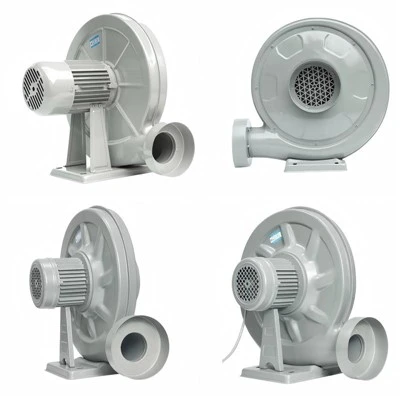
At the end of the day, the best fan for any job depends on your specific needs: airflow requirements, static pressure, noise limits, budget, and operational lifespan. Backward-curved axial fans aren’t the right fit for every application, but they’re a powerful, efficient option that’s been underrated for far too long. If you’ve been relying on forward-curved axial fans and are tired of high energy bills or excessive noise, it’s worth asking about backward-curved axial blades for your next fan project. Whether you’re designing a new building, retrofitting an existing ventilation system, or replacing old fans that are costing you money, we can work with you to find the right solution for your space. Don’t settle for a one-size-fits-all fan that doesn’t meet your needs—reach out to discuss your project details, and let’s find a fan that’s efficient, reliable, and built to perform for your specific application.
Duct Axial Fans References:
- ASHRAE Handbook – HVAC Systems and Equipment, American Society of Heating, Refrigerating and Air-Conditioning Engineers, 2020.
- Aerodynamics of Fans, Engineering Toolbox, 2022.
- Fan Performance Testing Standards, Air Movement and Control Association International (AMCA), 2021.
- Computational Fluid Dynamics for Fan Blade Design, Journal of Fluids Engineering, Vol. 142, No. 5, 2020.
- Energy Efficiency in Industrial Ventilation, U.S. Department of Energy, Industrial Technologies Office, 2021.
Taizhou Yijia Electromechanical Co., Ltd.
As one of the most professional axial flow fans manufacturers and suppliers in China, we also support customized service. Please rest assured to buy high quality axial flow fans in stock here from our factory. If you have any enquiry about cooperation, please feel free to email us.
Address: No. 47, Jinxing First District, Jintang Village, Jinqing Town, Luqiao District, Taizhou City, Zhejiang Province
E-mail: 826339968@qq.com
WebSite: https://www.yijiablower.com/
