Hey there, if you’re here because you’re working with low voltage transformers (LVTs) and wondering why grounding matters more than just sticking a wire somewhere, you’re in the right spot. I’m the owner of a small, specialized LV transformer supply company—we’ve been shipping units for everything from home solar setups to small commercial warehouses for 12 years, and I’ve seen firsthand what happens when someone skips proper grounding or cuts corners on it. Let’s break down the grounding requirements for these transformers like we’re chatting over a coffee, no stuffy jargon that makes your eyes glaze over. Low Voltage Transformer

First, let’s get the basics straight: low voltage transformers here mean units that run between 50V and 1000V, right? That’s the range for most residential, commercial, and light industrial use—think the ones that power your backyard workshop, office lighting controls, or small-scale backup systems. Grounding isn’t just a “safety box to tick”; it’s the backbone of preventing electric shocks, protecting your gear from frying, and making sure your entire electrical system doesn’t go haywire when something goes wrong. I’ve had a customer call me at 2 a.m. once because their new transformer’s circuit board blew, and when we traced it, the grounding rod they hired a handyman to install was only 2 feet deep in rocky soil—total rookie move that cost them $1,500 in downtime. Let’s not be that guy.
Now, the non-negotiable requirements. First up: the transformer’s neutral point has to be grounded. Wait, why? Because in an LV transformer, the neutral wire’s job is to balance the current between the two hot legs. If that neutral isn’t tied to the earth, any imbalance (like when you have a bunch of lights on one leg and none on the other) can make the hot wire’s voltage jump way higher than it’s supposed to—like going from 120V to 180V, which will toast your phone chargers, your fridge, whatever’s plugged in. That neutral ground isn’t optional for most LV transformers, at least not in North America, and most of Europe has similar rules. I always make a note to add a ground bus bar connected straight to the neutral terminal on every transformer we ship, because cutting that step leaves way too much room for error.
Next, the grounding conductor itself—you can’t just use any old wire. The size matters, a lot. It’s not like extending an extension cord where a thinner wire works for short distances. For LV transformers, the grounding conductor has to match the size of the phase conductors (the hot wires) if the phase conductors are 1/0 AWG or smaller. If they’re bigger than 1/0, the ground conductor can be one size smaller, but not thinner than 6 AWG. Wait, let me make that clear with an example: if your transformer has two hot wires that are 10 AWG, the ground wire has to be 10 AWG too. If the phase wires are 2/0 AWG, the ground can be 2/0 or 1/0 AWG? No, wait, actually it’s one size down, so 1/0. And you never go below 6 AWG for a ground—even if you have tiny phase wires, that 6 AWG minimum is non-negotiable because it needs to carry fault current safely. I’ve seen a guy try to use a 14 AWG ground for a 15-amp transformer, and when a fault happened, that thin wire melted, created a fire risk, and his entire panel tripped. Don’t do that.
Then there’s the grounding electrode—aka the rod or pipe you drive into the dirt to connect the ground wire to the earth. What are the rules here? First, it has to be a minimum of 8 feet long if you’re using a steel rod, right? And it has to be copper-clad, not bare steel, because bare steel rusts and loses conductivity over time. If you’re in an area with super rocky soil, you can use two rods driven at least 6 feet apart, connected together, to make up for the shallow depth you can’t get. Wait, and if you’re in a place where water is near the surface? No, you still can’t drive it just 3 feet deep. I learned that the hard way a few years back when we shipped a transformer to a customer in Florida who tried to skip the 8-foot rod because his yard was sandy—his ground resistance was too high, and when a nearby lightning strike hit, it traveled through the wiring instead of dissipating into the earth. The transformer’s primary coil got fried, and his neighbor’s outdoor AC unit did too. Oops. Also, the ground resistance of that electrode system has to be 25 ohms or less. You can test that with a cheap ground tester—we actually sell those as add-ons for our transformers now, because most people don’t own one and guessing is not a strategy.
Wait, another big one: the transformer’s metal casing and any exposed parts have to be grounded too. That’s the equipment grounding, separate from the neutral grounding. Why? If a hot wire inside the transformer touches the metal casing, that casing becomes energized. Without a ground, anyone touching it gets a nasty shock. With a ground, the fault current flows straight to the earth, trips the breaker, and no one gets hurt. I always tell our customers that even if the local inspector doesn’t flag it, grounding the casing is just common sense—we’ve had way too many horror stories of people getting shocked because they forgot this step.
Now, let’s talk about the exceptions, because not all LV transformers are the same. For example, if you have an isolated LV transformer—like the ones used in medical settings or sensitive lab equipment—you don’t ground the neutral point. Wait, why? Isolated transformers separate the primary and secondary sides, so there’s no direct connection to the grid. That way, if one hot leg on the secondary becomes energized, there’s no path for current to flow through a person touching it (unless they touch the hot and another grounded surface at the same time). But here’s the catch: even isolated transformers still need an equipment ground for the casing. You can’t skip that. I’ve had a few lab guys order these isolators and try to skip casing grounding, and I have to hand-hold them through that step because it’s a dangerous mistake. Also, isolated transformers have different grounding requirements because their neutral isn’t tied to earth, so you have to test the insulation more carefully to make sure there’s no leakage current.
Another thing that trips people up: grounding for single-phase vs three-phase LV transformers. For single-phase units, it’s straightforward—just ground the neutral and the casing, done. For three-phase, you have to ground the neutral (if it’s a wye configuration; delta configurations are different, but most LV three-phase are wye) and all three phase conductors are balanced, so the neutral carries minimal current. But you still have to make sure the ground conductor is sized correctly for the maximum fault current. I always provide a sizing chart with every transformer we ship, so customers don’t have to Google it and get the wrong answer.
Wait, let’s talk about common mistakes I see all the time. First, using the wrong conductor material. Some guys want to use aluminum ground wire because it’s cheaper, but aluminum oxidizes faster than copper, which raises resistance over time. If you use aluminum, you have to be diligent about securing the connections with anti-oxidation paste, and you can’t splice it with copper without a proper connector—bad connections cause hot spots, which lead to fires. We recommend copper for all grounding conductors for our transformers, it’s not much more expensive and it’s way more reliable long-term.
Second, bad connections. The ground wire isn’t just stripped and twisted around the rod and the transformer terminal—you have to use proper lugs, torque them to the manufacturer’s specs, and seal the rod connection so moisture doesn’t get in and cause corrosion. A lot of people use electrical tape to seal the rod, which is useless—you need a rubber boot or a heat-shrink sleeve that’s rated for outdoor use. I had a customer last year who had a bad rod connection because he used tape, and after a year of rain and sun, the connection corroded, his ground resistance went up, and his transformer failed during a storm. We replaced the transformer for free, but that was a avoidable hassle for both of us.
Third, not following local electrical codes. Wait, I know everyone hates codes, but they’re there for a reason. National Electrical Code (NEC) in the US, IEC 60364 in Europe, AS/NZS 3000 in Australia—they all have specific grounding requirements for LV transformers, and inspectors will flag if you don’t meet them. For example, some areas require the grounding electrode to be bonded to the building’s main ground, not just the rod outside. I always tell our customers to check their local codes before starting installation, and if they’re not sure, hire a licensed electrician—$200 for a pro is way cheaper than replacing a $1,000 transformer and paying a fine.
Now, let’s get to why this matters for our business, too. We test every single transformer we ship to make sure the neutral and casing terminals are properly rated for grounding, so our customers don’t have to worry about if the terminals can handle the fault current. We also include a step-by-step installation guide that’s not full of technical jargon—it’s written like we’re explaining it to a friend, so even someone who’s not an electrician can follow along, as long as they know their limits. If you’re a contractor, a solar installer, a DIYer who’s taken a few electrical courses, or a facility manager, we’ve got your back.
Wait, let’s wrap this up. To recap the key grounding requirements for low voltage transformers, so you don’t forget: 1) Ground the neutral point (unless it’s an isolated transformer, in which case just ground the casing). 2) Use a copper grounding conductor sized correctly for your phase wires, never smaller than 6 AWG. 3) Install a proper grounding electrode: 8-foot copper-clad rod, two rods if rocky soil, keep ground resistance under 25 ohms. 4) Ground the metal casing and all exposed parts. 5) Follow local electrical codes, and don’t cut corners on connections or materials.
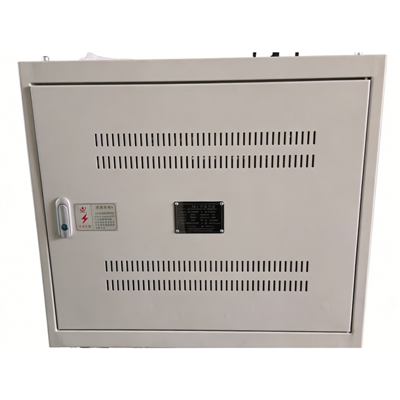
If you’re looking for a reliable LV transformer, or you have questions about grounding for your specific setup, hit us up. We don’t do pushy sales, we just want to make sure you get the right unit that works safely for your project. Whether you need a 1kVA transformer for a backyard shed, a 50kVA unit for a small commercial space, or something in between, we’ve got options, and we’ll help you make sure the grounding is done right. Don’t take shortcuts here—your safety and your gear depend on it.
Low Voltage Transformer References:
- National Electrical Code (NEC) Article 250: Grounding and Bonding
- IEC Standard 60076-1: Power transformers – Part 1: General
- OSHA Electrical Safety Standards (29 CFR 1910 Subpart S): Electrical
- Institute of Electrical and Electronics Engineers (IEEE) Std 142: Recommended Practice for Grounding of Industrial and Commercial Power Systems
Huachi Electric Co., Ltd.
We’re well-known as one of the leading low voltage transformer manufacturers in China, featured by quality products and good service. Please rest assured to buy customized low voltage transformer made in China here from our factory. Contact us for more details.
Address: Plastic Park, Tongyu Street, Luqiao District, Taizhou City, Zhejiang Province
E-mail: HCDQ2026@163.com
WebSite: https://www.huachi-electric.com/
