Let me take you behind the scenes of our gravure roller manufacturing floor last Tuesday. A regular customer, one who runs flexible packaging lines for snack bars, called in panic—their latest 100k unit print run was being rejected at their quality check because the red color shifted noticeably from the first 5k to the last 5k. I hopped on a call with their plant manager, and what we uncovered? It all traced back to a tiny, often overlooked detail: color consistency in the gravure roller’s engraved cells. Most printers focus on ink formulation and press settings, but for rollers like ours, that consistent tone across millions of prints lives in the micro-patterns we etch. That’s the difference between a good run and a catastrophic one—trust me, we’ve fixed this exact problem more times than I can count for clients who thought their ink was the issue, not the roller. Gravure Roller
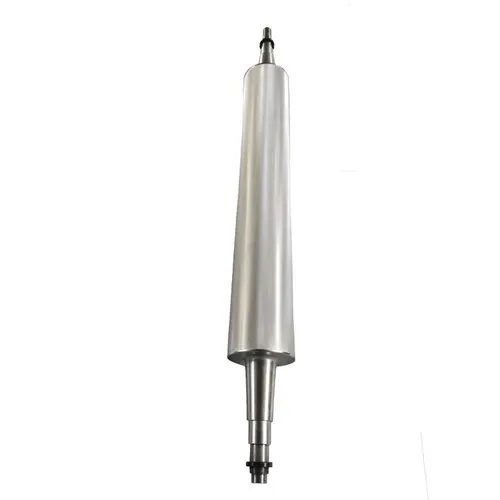
Let’s start with the basics of how a gravure roller works, because this is where color consistency begins. Unlike flexo or offset, which lay ink on top of the substrate, gravure uses tiny, precise cells engraved into the chrome-plated steel roller. The doctor blade scrapes excess ink off the surface, leaving only the ink trapped inside the cells to transfer to paper or film when the roller presses against it. So the volume, depth, and cross-section of each cell directly control how much ink hits the substrate—and that volume is what determines color density and uniformity. If even a fraction of those cells are inconsistent in their engraving, you get that patchy, faded, or shifted color that the snack bar plant was seeing.
Now, color consistency in gravure isn’t just about matching a Pantone swatch on the first print. It’s about maintaining that exact match over 1 million, 5 million, even 10 million impressions. That’s the long game, and it’s where roller quality makes or breaks print runs. I remember a client in the cosmetic packaging industry who switched to low-cost rollers from a competitor—they saved 20% on roller costs, but after 800k prints, their foundation bottles’ navy blue went from a deep, rich navy to a washed-out gray. By the time they caught it, they’d wasted $120k in packaging material, plus lost shelf space at a major retail chain. We re-engraved their original rollers with strict color consistency controls, and they’ve been with us ever since. That’s the real cost of ignoring color consistency in roller manufacturing—not just the roller price, but the downstream hits to a business.
So what actually causes color inconsistency in gravure rollers, and how does that tie to print quality? Let’s break down the key factors, based on what we monitor in our factory every single day. First, there’s cell depth control. When we engrave a roller, we use a diamond stylus that carves each cell—if the stylus wears unevenly mid-run, or the engraving machine’s calibration drifts by even 0.5 microns, that’s enough to make adjacent cells hold different amounts of ink. Over millions of impressions, that tiny depth variation compounds: some cells hold too much ink, creating dark spots, others hold too little, leading to light streaks. We use laser micrometers to test cell depth across the entire roller surface, not just a few random spots, because 99% of cheap rollers only test a 1-inch section and call it good.
Next, cell geometry. It’s not just how deep the cell is—its shape and wall structure matter too. If cells are engraved with inconsistent cross-sections (say, some are rounded and some are angular), ink drains unevenly during the doctor blade step. Angular cells release ink more consistently than rounded ones, so even minor shape variations lead to color shifts across a long run. We also pay close attention to cell spacing—too much spacing and you get gaps, too little and cells overlap, causing ink pooling. We use a scanning electron microscope (SEM) to audit cell geometry on every high-volume roller we produce, a step most small suppliers skip because it adds time and cost, but it’s non-negotiable for color consistency.
Then there’s the chrome plating process. The roller’s surface is plated with hard chrome to resist wear, but if that plating is uneven, it can distort the engraved cells over time. Thin chrome wears faster, so cells in low-chrome areas get shallower after fewer impressions, leading to fading. We use a Hall effect thickness gauge to measure chrome uniformity across the roller, ensuring it’s within 0.2 microns across the entire surface. That’s another thing our competitors often cut corners on—they plate thicker in some areas to pass quick tests, but thin in others. Over 5 million impressions, the difference shows up as color variation the client can’t explain.
Let’s tie this back to that snack bar customer’s issue last week. They’d bought a new set of rollers from a supplier who did 100% electronic engraving, no manual calibration. The engraving software had a glitch that made 15% of the red cells 1.2 microns shallower than the rest. The first 5k prints only used a small portion of the roller, so the cells were still new and consistent. Once the line ran past 5k, the press started using the shallower cells, so the red faded. We sent a technician to test their old rollers (the ones they’d replaced) and found our original cell depth was consistent within 0.3 microns. We also retrofitted their new rollers with a manual calibration step we add for high-volume long runs, fixing the color shift. That call lasted two hours, but it saved them from a full print run rework.
Another critical point: color consistency isn’t just a technical spec—it’s tied to print run length and substrate type. A gravure roller for flexible plastic needs different cell volume consistency than one for cardboard, because plastic doesn’t absorb ink the way paper does. If you have a roller with consistent cell depth on paper, it’ll still have color shifts on plastic because the ink transfer rate changes. We test rollers on actual substrates, not just aluminum foil or plastic film samples in a lab. A lot of suppliers test on one material and send rollers for a different substrate, which is a recipe for color inconsistency. We do a 200-print validation run on each roller, using the client’s exact substrate and ink, to confirm color density stays within Delta E 1.5—something most quality standards require for packaging, but many suppliers don’t bother.
Let’s talk about Delta E, because this is the language of color consistency in printing. Delta E measures the difference between two colors, with anything under 2 considered imperceptible to the human eye for packaging applications. For high-end cosmetic or pharmaceutical packaging, Delta E 1 is the gold standard. When we produce a gravure roller, we calibrate the engraving to target a specific Delta E across 10 test prints, each from a different section of the roller. Cheap rollers might hit Delta E 3 or higher on those tests, because they skip the cross-section testing. Those Delta E differences sound small, but over 10 million impressions, they turn into the streaks or patches that force a client to scrap thousands of units.
I can’t stress enough how common this is. Last month, a pharmaceutical client reached out because their prescription blister packs had a blue line that shifted mid-run. They’d spent $50k on ink adjustments, but the real issue was their rollers—they’d been running for 8 million impressions, and the chrome plating had worn unevenly, making cells shallower. We re-engraved the rollers with a new hard chrome plating process we developed specifically for long runs, and now their color consistency stays within Delta E 1.2 even after 12 million impressions. The client said that re-engrave saved them from a $200k recall, which is way more than the cost of our roller service.
So what should you look for when choosing a gravure roller, if color consistency is your top priority? First, ask for proof of cell depth and geometry testing across the entire roller, not just a sample. Second, confirm they test rollers on your exact substrate and ink, not generic materials. Third, ask about their chrome plating process and wear resistance guarantees. A supplier that will give you a 10-year track record of roller performance for your specific print application is far more reliable than one that only offers a low upfront price.
At the end of the day, gravure printing is all about consistency—for every impression, every color, every run. A small roller detail might seem insignificant, but as we’ve seen, it can make or break a client’s reputation, their budget, and their ability to meet delivery deadlines. That’s why we put so much time and care into every roller we manufacture, and why we don’t cut corners on the steps that ensure color consistency.
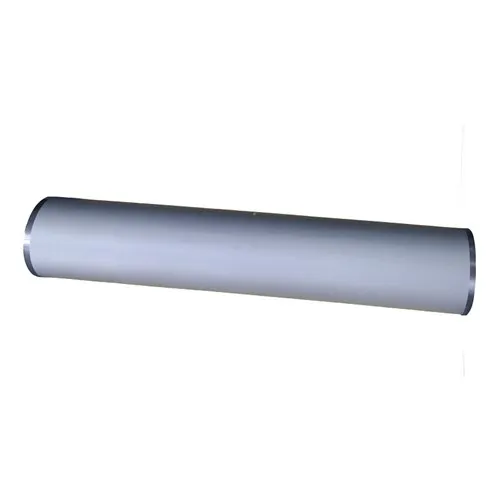
If you’re experiencing color shifts, faded prints, or inconsistent density in your gravure runs, or if you’re looking to upgrade rollers for consistent long-run performance, we’re here to help. Our team can audit your current rollers, test cell geometry and depth, and recommend the right solution for your specific application. We work with clients across packaging, publishing, and specialty printing, so we understand that every color needs to hold up, run after run. Reach out to our team to schedule a consultation—let’s solve your color consistency challenges together.
Anilox Sleeve References
Kipphan, H. (2001). Handbook of Print Media: Technologies and Production Methods. Springer.
Leach, R. (2019). Measurement and Calibration in Precision Engineering. CRC Press.
Printing Industries of America. (2021). Gravure Printing Quality Standards and Best Practices.
Kunshan Hanhan Co., Ltd.
We’re well-known as one of the leading gravure roller manufacturers and suppliers in China. We warmly welcome you to buy high quality gravure roller made in China here from our factory. If you have any enquiry about cooperation, please feel free to email us.
Address: No. 1093, B Zone, No. 2 Xugongqiao Rd, Huaqiao Town, Kunshan City, Suzhou, Jiangsu, China
E-mail: info@kshhroller.com
WebSite: https://www.kshh-roller.com/
