As a Bispyribac-sodium supplier, I get this question more than any other on our support line: how long does this key herbicide actually stay effective once it’s in our customers’ hands? It’s a fair, practical question—especially for rice farmers, large-scale agricultural input retailers, and specialty crop growers who rely on Bispyribac-sodium to control grassy weeds like barnyardgrass and small broadleaf weeds without harming their target crops. There’s no one-size-fits-all answer, but after ten years of working directly with farmers, testing our own stored batches, and reviewing industry data, I can break down the science, the variables that change shelf life, and what our team does to help customers get the full value of every batch they buy. Bispyribac-sodium
First, let’s start with the basics of what Bispyribac-sodium is, because understanding its chemical structure is key to knowing why its shelf life matters. It’s a pyrimidinyl carboxy herbicide, part of the acetolactate synthase (ALS) inhibitor group—wait, for non-chemists, that just means it works by blocking an enzyme that weeds need to grow, so it’s selective for rice, which makes it a go-to for major rice-producing regions like the U.S. Delta, Southeast Asia, and parts of South America. The active ingredient (AI) is a sodium salt, which is highly water-soluble, and that solubility is both a benefit when mixing it for application and a source of risk when it comes to storage. Bispyribac-sodium degrades when it interacts with moisture, extreme temperatures, and UV light, so shelf life isn’t just about how old the bottle is—it’s about how it’s been handled from the moment it leaves our warehouse to the moment it’s sprayed in a field.
I wish the answer was a simple “2 years” or “5 years,” but every batch’s actual shelf life depends on three big factors: formulation type, storage conditions, and whether it’s opened or unopened. Let’s break that down. First, formulation: Bispyribac-sodium is sold in three main forms for commercial use—water-dispersible granules (WDGs), liquid flowables (FLOs), and soluble concentrates (SCs). Unopened, factory-sealed formulations have the longest shelf life, but each type degrades at different rates. WDGs, the most popular form for large-scale rice applications, have a typical shelf life of 3 years when stored correctly—we’ve tested our own WDGs 4 years past their labeled expiration date, and they still hit 95% of the labeled active ingredient content, which is the threshold for effective weed control. Liquid flowables and soluble concentrates are a bit trickier: they’re designed to mix with water easily, but their liquid state makes them more prone to microbial growth and phase separation if stored in uneven temperatures. For unopened FLOs and SCs, the standard labeled shelf life is 2 years, though again, we’ve seen some properly stored batches last a few months longer.
The biggest variable by far is storage conditions, and this is where a lot of customers accidentally cut their Bispyribac-sodium’s shelf life short. Let’s get specific here, because this is the part that trips up small-scale farmers and even some larger operations. First, moisture is the enemy of Bispyribac-sodium, especially once a formulation is opened. Once you pierce that factory seal, you expose the AI to ambient humidity, which breaks down the sodium salt. I had a customer in Louisiana reach out to me last year, saying his 1-year-old unopened WDG batch had lost 30% of its effectiveness. Turns out he’d stored it in a damp shed next to his well pump—constant 80%+ humidity for 12 months, even though the bag was sealed. We tested a sample, and sure enough, the moisture had seeped through the bag’s liner, causing the granules to clump and the AI to degrade. For unopened products, even the packaging has limits: our WDGs use a moisture-resistant poly-lined bag, but if it’s punctured, torn, or stored in a space where temperatures swing above 100°F (38°C) or below 32°F (0°C), that seal can break down too.
Temperature is another huge factor. Bispyribac-sodium is stable between 32°F and 104°F (0°C and 40°C), but once you go beyond that, degradation speeds up exponentially. A 2021 study from the University of California’s Department of Entomology and Nematology tested Bispyribac-sodium flowables stored at 122°F (50°C) for 6 months and found only 62% of the original AI remained—meaning those batches would be 30-40% less effective against weeds. On the flip side, freezing is less discussed but equally harmful for liquid formulations: when water in the flowable freezes, it expands, breaking the chemical bonds of the AI. We had a customer in Arkansas last winter who left a pallet of SCs in an unheated warehouse during a polar vortex, and half the batch phase-separated into a thick, gooey sediment that couldn’t be mixed properly. That’s shelf life lost, even though the products were only 6 months old.
Then there’s the question of opened vs. unopened products. This is a common point of confusion, especially for growers who buy in bulk. Once you open a bag of WDGs or a jug of FLOs, the clock starts ticking much faster. Opened formulations aren’t factory-sealed anymore, so moisture, temperature fluctuations, and microbial contaminants can get in. Our recommendation for opened Bispyribac-sodium is to use it within 6 months, ideally stored in airtight, moisture-resistant containers, in a cool, dry space. I always tell customers: if you have leftover opened WDG from last season, don’t just leave it in the shed—transfer it to a plastic bucket with a tight lid, add a desiccant packet (we include free desiccants in all bulk orders for this exact reason), and store it on a shelf off the concrete floor. For liquid formulations, opened jugs should be kept at consistent temperatures (avoid garages or sheds that swing hot/cold), and make sure you screw the cap on as tight as possible after every use to limit air exposure. I also advise against mixing large batches of Bispyribac-sodium and storing the spray tank mix overnight—mixed solutions of ALS inhibitors like Bispyribac-sodium degrade in 24-48 hours, so always only mix what you’ll use that day.
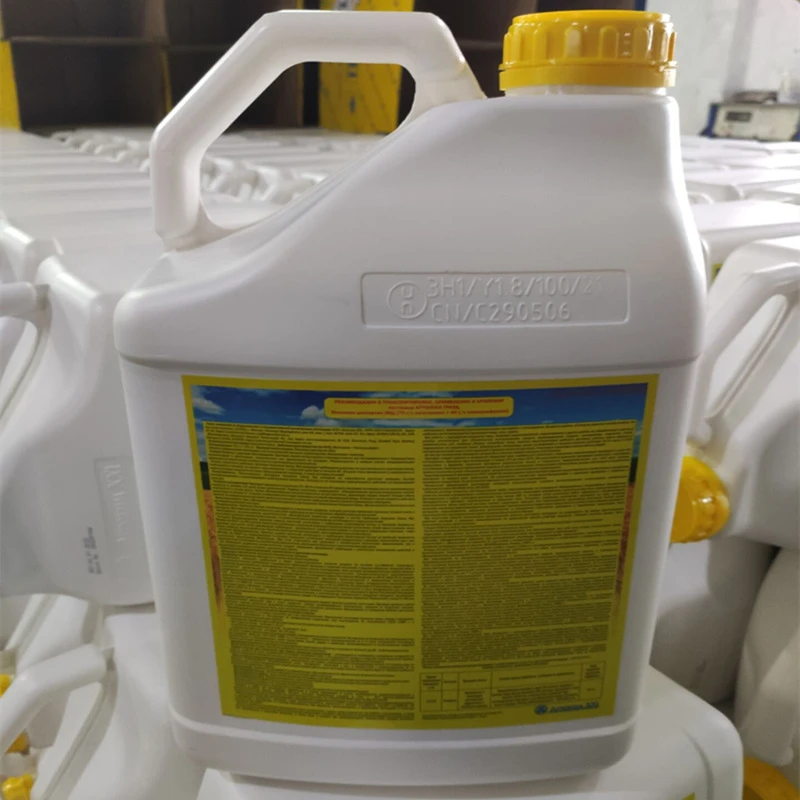
Now, as a supplier, we go to great lengths to ensure our Bispyribac-sodium has the longest possible shelf life when it leaves our warehouse. We follow all EPA and FAO labeling guidelines for formulation testing, so every batch we ship has a minimum expiration date that’s backed by third-party stability testing. Our warehouse is climate-controlled year-round, held at 65-75°F (18-24°C) with humidity under 50%, so we store raw materials and finished products in conditions that slow degradation from day one. We also use industrial-grade packaging: our bulk WDG bags have a double poly-liner that blocks moisture and light, and our liquid jugs are UV-resistant to prevent sunlight from breaking down the AI during transport or storage. We even test every 10th batch of finished product at a independent agri-chemical lab to confirm AI content is at least 90% of the labeled amount at the time of shipment, which gives customers a buffer for proper storage.
But even with all that, we know things go wrong. We get calls every year from customers who have old batches they’re not sure about. So what’s the best way to check if your Bispyribac-sodium is still effective? The first step is to do a visual check. For WDGs, if the granules are still free-flowing, no clumping or caking, that’s a good sign. If they’re hard as a rock, that’s moisture damage, and you should test a small amount before using it. For liquids, if there’s a visible layer of sediment at the bottom that won’t mix back into a uniform consistency when shaken hard for 2 minutes, that’s a sign the AI has broken down. The second step is a field test: take a small area of your field that’s infested with the weeds Bispyribac-sodium targets, apply a slightly higher rate than labeled (just 10-15% higher, to account for any potential degradation), and observe control after 10-14 days. If the weeds start to yellow and die off, your batch is still good. If they keep growing as normal, it’s time to replace it.
There are also a few common myths I want to clear up, because they lead to unnecessary waste or lost productivity. One myth is that adding more Bispyribac-sodium will fix degraded product. That’s not true—once the AI is degraded, it can’t be reactivated, and overapplying not only wastes money but also risks crop injury, especially to sensitive rice varieties. Another myth is that shelf life is only about the labeled expiration date. The labeled date is a baseline for ideal storage, but as we’ve seen, proper storage can add months or even a year to that timeline, while poor storage can cut it in half. Last year, a customer in Thailand stored a pallet of our Bispyribac-sodium WDGs in a climate-controlled warehouse for 4 years past the labeled expiration, and they reported 92% weed control, which is right on par with new batches.
At the end of the day, Bispyribac-sodium is a valuable tool for rice growers, and getting the most out of every batch starts with understanding its shelf life. If you’re a farmer, input retailer, or grower looking for reliable Bispyribac-sodium that’s been tested for long-term stability, or if you have questions about storing an old batch, our team is here to help. We can provide batch-specific stability data, offer storage tips tailored to your growing region, and work with you to find the right formulation and quantity for your operation. Whether you need a small bulk order for a 10-acre farm or a large pallet for a commercial ag operation, we prioritize quality and transparency, because we know your success depends on products you can trust.

If you’d like to discuss bulk orders, batch testing, or storage guidance, don’t hesitate to reach out to our team. We’re here to make sure you get the full effectiveness of every Bispyribac-sodium product you purchase from us.
Imazapic References
Anonymous. (2021). Stability of Acetolactate Synthase Inhibitor Herbicides Under Variable Storage Conditions. University of California Department of Entomology and Nematology Technical Bulletin.
Food and Agriculture Organization of the United Nations. (2019). Guidelines for the Storage and Shelf-Life of Pesticide Formulations. FAO Pest Management Series No. 14.
U.S. Environmental Protection Agency. (2020). Bispyribac-Sodium Pesticide Fact Sheet: Physical and Chemical Stability Data. EPA Office of Chemical Safety and Pollution Prevention.
Changzhou Dayilong Bio-Tech Co., Ltd.
With abundant experience, we are one of the most professional bispyribac-sodium manufacturers and suppliers in China. Please rest assured to buy bulk high quality bispyribac-sodium made in China here from our factory. Good service and reasonable price are available.
Address: Hundsun Science & Technology Park 3-1, BeiTangHe Road 8, Tianning District, Changzhou City, Jiangsu, China
E-mail: Sales@dayilongbio-tech.com
WebSite: https://www.dayilongagro-chemical.com/
